Direct answer: Hire app developers by starting with the product outcome, delivery constraints and ownership model—not a checklist of frameworks. The right team should be able to clarify the problem, explain technical trade-offs, ship a focused first release and operate the product after launch.
A strong application team combines product thinking, experience design, engineering, quality assurance and delivery discipline. Individual specialists still matter, but the commercial result depends on how those disciplines work together around one roadmap.
Define the product before defining the team
Begin with the customer problem, the business result and the workflow the application must improve. A consumer subscription product, field-service platform and regulated internal tool create different requirements for architecture, accessibility, security, analytics and operations.
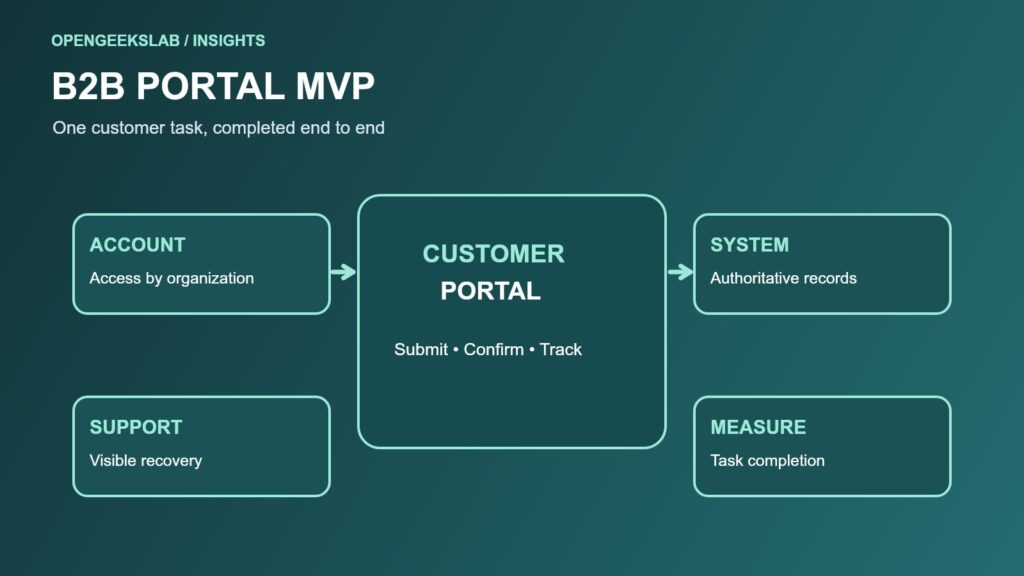
Write down the primary user, the core journey, the evidence of value and the constraints that cannot move. Include target platforms, integrations, data sensitivity, launch timing, internal stakeholders and any existing systems the new product must work with. This gives potential developers enough context to propose a responsible delivery approach.
Choose an engagement model that matches the work
A dedicated product team is useful when the scope will evolve through discovery and measured releases. Staff augmentation can work when an established internal team already owns product direction, architecture and delivery. A focused project engagement fits a defined outcome with clear acceptance criteria and decision-makers.
Do not treat these models as interchangeable labels. Ask who owns prioritization, technical decisions, design quality, testing, release management and production support. An unclear ownership boundary creates more risk than the choice between two capable frameworks.
Evaluate product judgment, not only technology
Experienced app developers should ask why a feature exists, who uses it, what happens when it fails and how the team will know it works. During evaluation, present a realistic workflow and ask the team to identify assumptions, risks and the smallest useful release.
- Can they separate the critical user journey from optional features?
- Do they explain trade-offs in language that product and business stakeholders can use?
- Can they describe failure states, recovery, support and operational visibility?
- Do they connect architecture decisions to expected scale, security and maintenance?
- Will they challenge an expensive requirement when a simpler path can test the same assumption?
Relevant case studies are most useful when they show the problem, team responsibilities, decisions and delivered outcome—not just a gallery of interfaces.
Inspect the engineering and quality practices
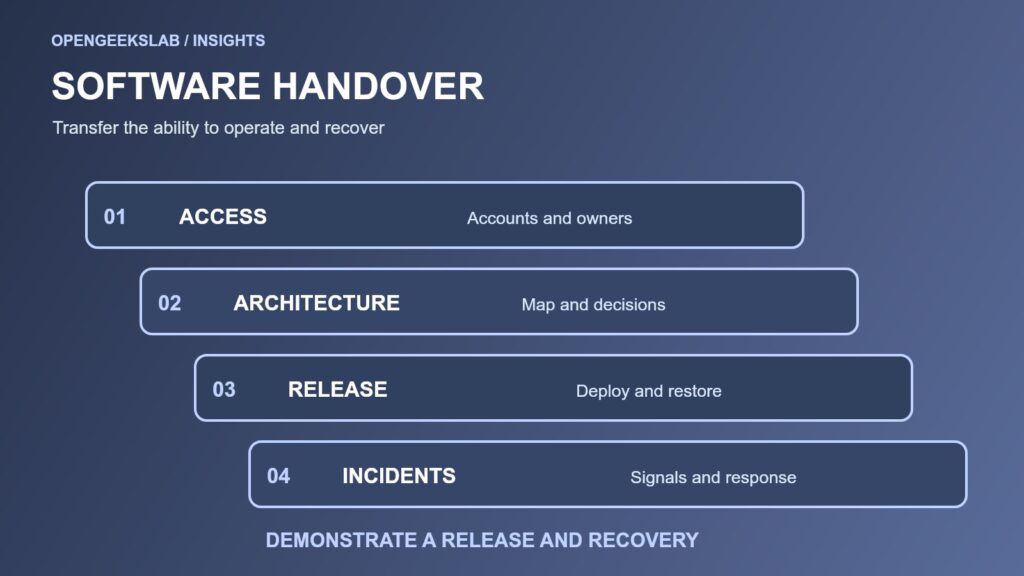
Ask how the team reviews code, manages environments, tests critical flows and releases changes. The answer should cover source control, peer review, automated checks, manual exploratory testing, observability, dependency updates and rollback. For mobile products, include device coverage, store release processes and compatibility with supported operating-system versions.
Security should appear in normal delivery work. Useful signals include least-privilege access, protected secrets, dependency monitoring, secure authentication, audit events and a clear response when a vulnerability is found. The OWASP Application Security Verification Standard provides a practical basis for discussing application security requirements.
Accessibility is also an engineering responsibility. Teams should design and test keyboard use, focus behavior, labels, contrast, error feedback, reduced motion and screen-reader support. The W3C Web Content Accessibility Guidelines provide the shared reference.
Use discovery to reduce hiring and delivery risk
A short discovery phase can turn an uncertain idea into a delivery plan. It should produce a prioritized journey, architecture direction, integration map, risk register, measurement plan and release scope. Discovery is valuable when it changes a decision; it should not become a long document exercise that delays real validation.
For an existing product, begin with the current codebase, incident history, analytics, support issues and roadmap. A technical assessment can reveal whether the first investment belongs in new features, modernization, platform reliability or a smaller proof of feasibility. OpenGeeksLab describes this decision-led approach in How We Build.
Compare proposals on total delivery responsibility
An hourly rate does not show the cost of unclear requirements, rework, slow review or weak production ownership. Compare what each proposal includes: product analysis, UX, architecture, engineering, QA, project management, infrastructure, analytics, launch support and documentation.
Ask for the assumptions behind the estimate and the events that would change it. A credible proposal identifies unknowns, dependencies and decision deadlines. It also defines how progress will be demonstrated through working software, not only status reports.
Common hiring mistakes
- Hiring for a framework before clarifying the product. Technology matters, but the team first needs to understand the workflow and operating context.
- Choosing the lowest estimate without comparing scope. A smaller number may exclude design, testing, infrastructure or launch support.
- Ignoring post-launch ownership. Monitoring, support, store releases, security updates and product learning continue after the first release.
- Starting too many features at once. A focused release produces clearer evidence and reduces integration risk.
- Accepting opaque communication. Risks and trade-offs should be visible early enough for the business to act.
A practical selection process
- Prepare a concise product brief covering users, outcome, constraints and current evidence.
- Shortlist teams with relevant delivery responsibility and clear examples of comparable complexity.
- Run a working session around one real workflow, including failure and operational cases.
- Review the proposed team, ownership model, assumptions, milestones and quality practices.
- Begin with a bounded discovery, assessment or first release that produces usable evidence.
OpenGeeksLab brings product discovery, design and engineering together around measurable delivery. Learn more about the team or discuss your application.
Frequently asked questions
Should I hire freelancers or an app development company?
Freelancers can be effective when you already have strong internal product and technical ownership. A product company is better suited when the engagement also needs coordinated discovery, design, architecture, quality assurance and delivery management.
How much should be defined before developers start?
Define the user, desired outcome, constraints and primary workflow. Leave room to refine detailed requirements through discovery, prototyping and implementation evidence.
What should the first contract deliver?
It should deliver a decision or a usable product increment: a validated scope, technical assessment, feasibility prototype or focused first release with clear acceptance criteria and next-step evidence.