Frame the Decision
Clarify the workflow, users, constraints and evidence needed for the next decision.
01Start with the business challenge
Slow systems, manual work, outdated software or a product that has to launch fast: we turn business problems into custom software, AI and automation, from discovery and UX design to engineering and long-term support.
Start with the business challenge
Pick the problem closest to yours. Each one shows the signs, how we solve it, proof and the smallest useful first step.
Validate your idea, design the experience and build a scalable MVP or production-ready application.
Connect business systems, streamline workflows and automate repetitive tasks.
Modernize existing applications, improve maintainability and reduce the risks of outdated technology.
Build practical AI capabilities around real users, trusted data and clear performance requirements.
Success stories
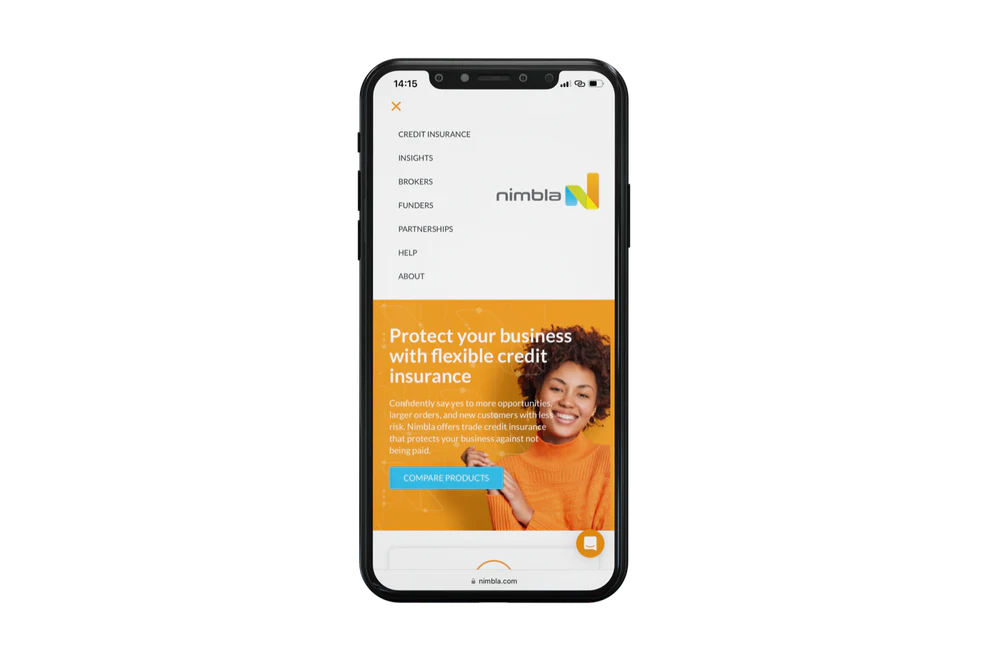
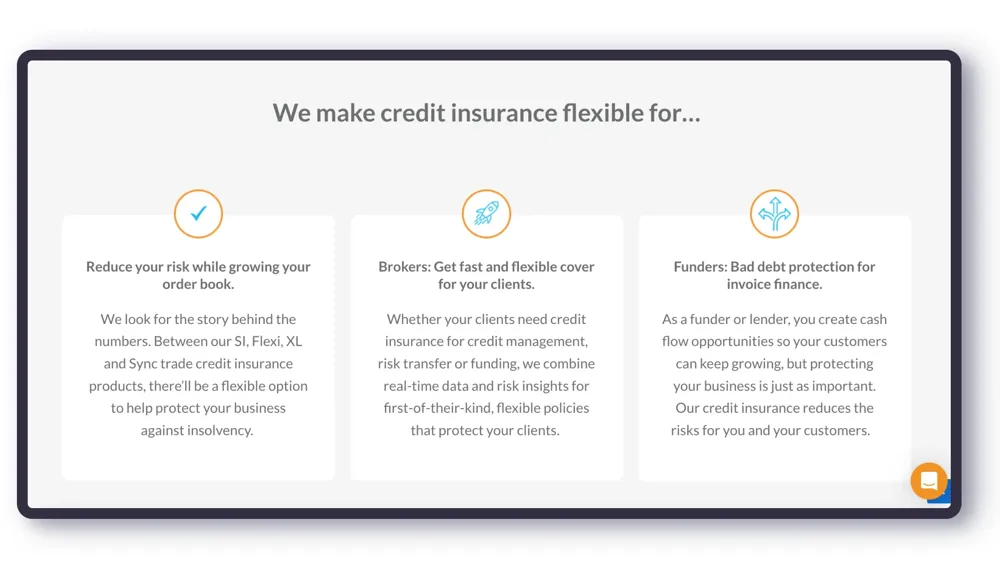
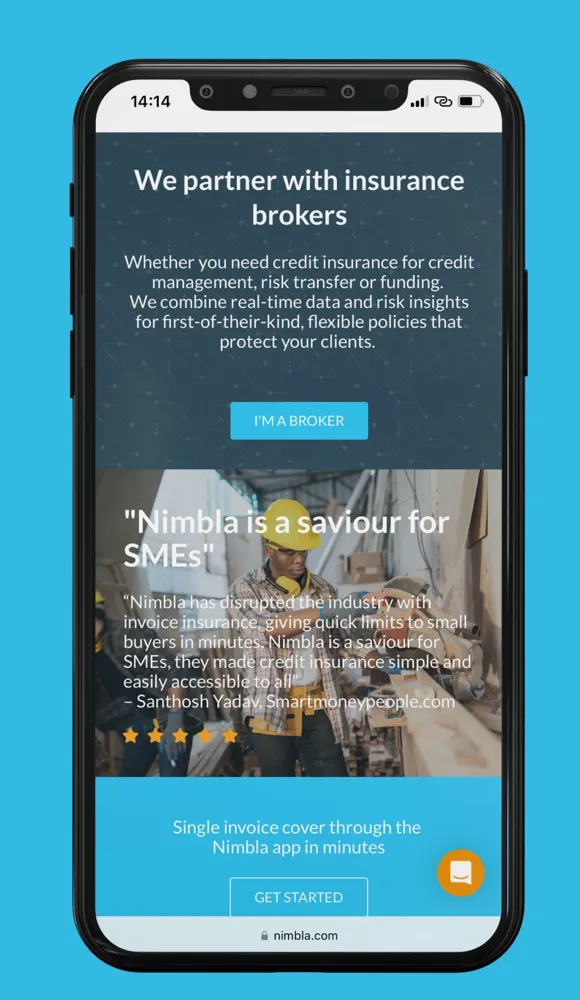
Evolving an invoice-insurance MVP into a scalable product connected to accounting and risk workflows.
More than 2,700 monthly active users and 10,000 policies sold over 18 months by December 2021.
Read the case study →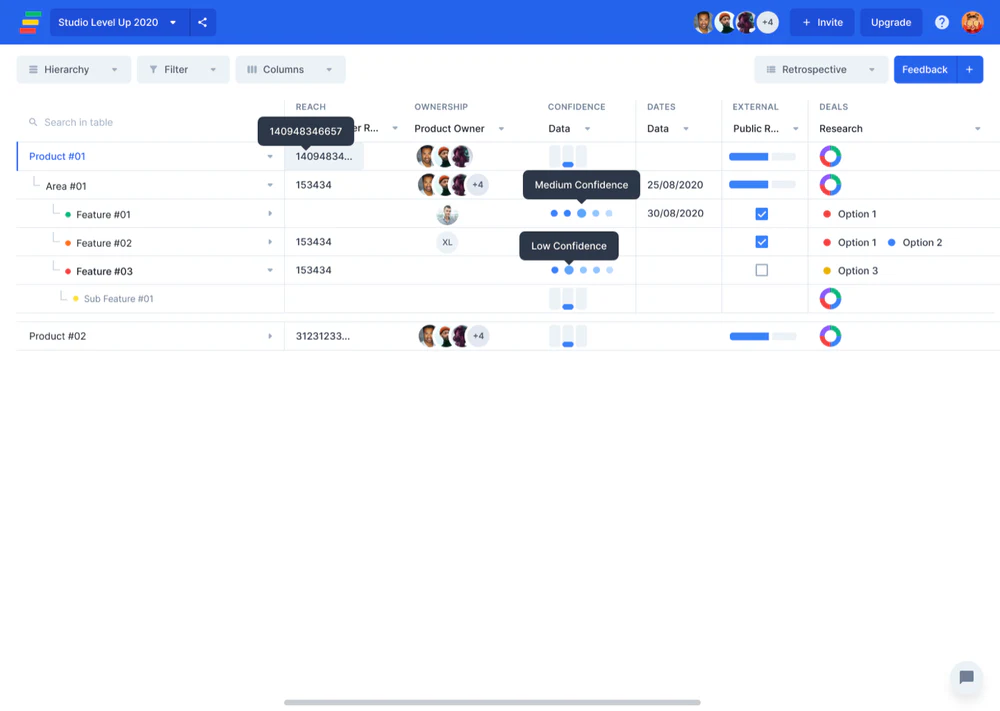
A configurable platform for prioritization, reporting, feedback and product collaboration.
The platform reached 1,000 paid subscriptions and users by June 2023.
Read the case study →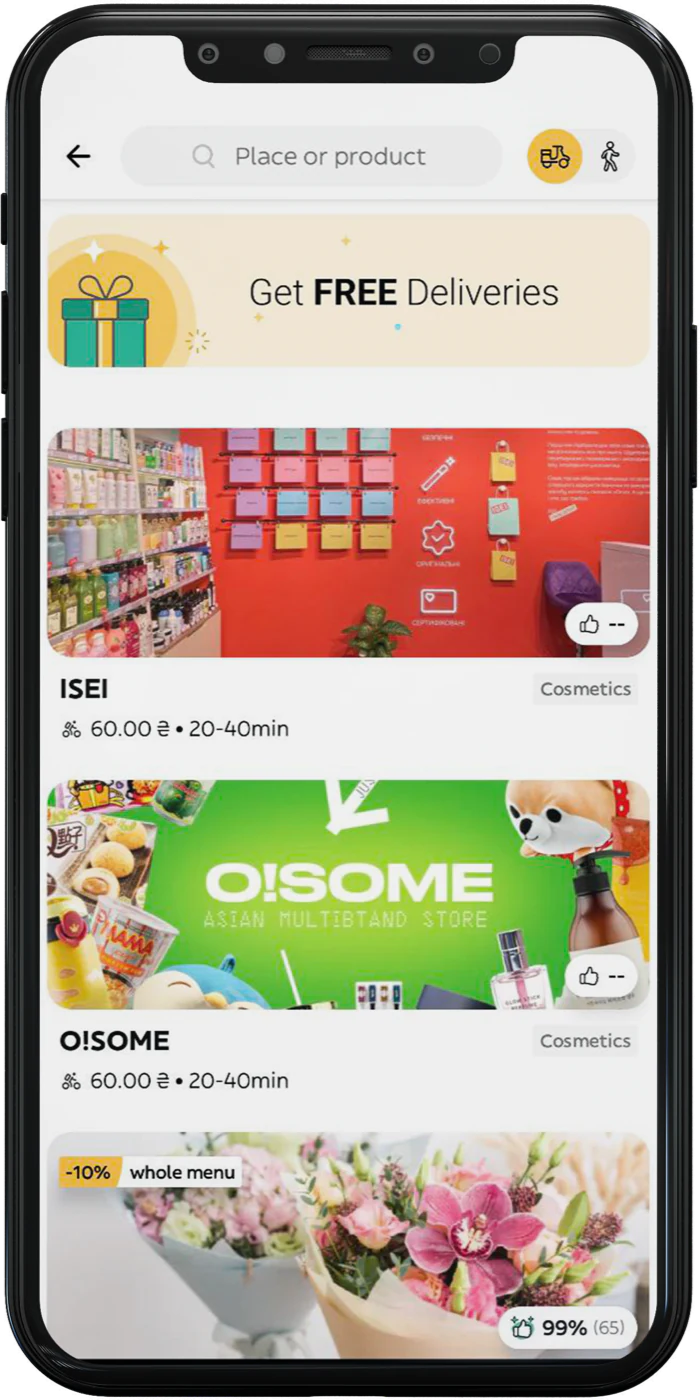
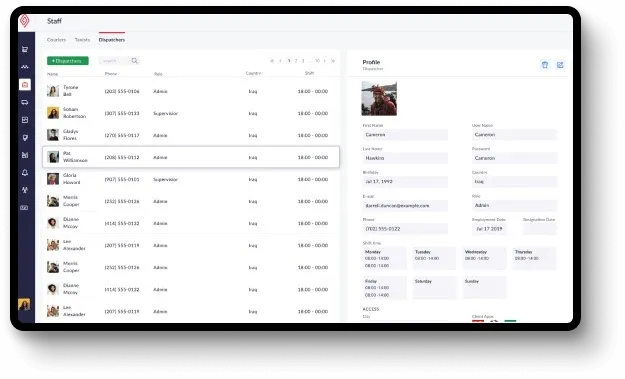
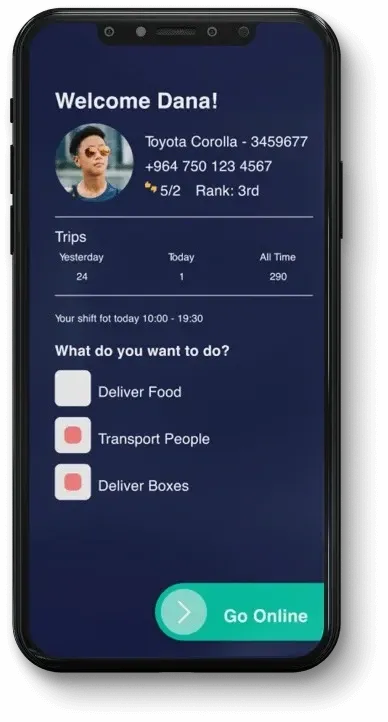
Backend administration and operational workflows for an established on-demand marketplace.
Operational backend capability for an established on-demand delivery platform.
Read the case study →AI at the core
AI is part of how we design, build and test, with experienced people accountable for every decision.
Assistants, retrieval, agents and workflow automation designed for usefulness, control and production operation.
Explore AI Development →AI speeds up research, prototyping, implementation, testing and documentation. Experienced people stay accountable.
How we build →Prove the riskiest part first: a focused prototype tested against agreed acceptance criteria before the MVP.
Ways to start →Twelve release gates from our AI prototype audit. Answer them and see what to fix before production.
Check your prototype →Delivery approach
A shared view of scope, evidence, dependencies and acceptance criteria keeps the next decision visible throughout delivery.
Clarify the workflow, users, constraints and evidence needed for the next decision.
Make scope, experience, architecture, integrations and acceptance criteria visible.
Deliver reviewable software with automated checks, regular feedback and transparent progress.
Plan monitoring, support ownership, rollback and the next product decision before release.
We can own a defined workstream or collaborate with internal product, design and engineering teams.
Architecture, source code, documentation and operating knowledge are structured for client ownership under the agreed contract.
Scope, dependencies, acceptance criteria, testing and release controls remain visible throughout delivery.
Ways to start
A focused first step that ends with something you can evaluate, before you commit to a larger build.
Engagement & pricing →Best when: You have an existing product, codebase or legacy system.
Best when: You have a business problem and need a responsible build decision.
Best when: A key technical or AI question must be answered before the MVP.
Not sure which one fits? Answer four questions and get a suggested starting point.
Find your starting point →Why teams trust us
“Working with openGeeksLab was a great experience.”
 Amazon Web ServicesCloud deployment for Nimbla, Lezzoo and GOeureka
 CodatAccounting data sync for invoice insurance
 TwilioIn-app calls and messaging for ride-hailing
 Google APIsPlatform services in a creator marketplace
 EthereumSmart contracts in streaming and travel
 Amazon ElasticsearchSearch across inventory and records
Our expertise
From discovery and design to engineering, AI and modernization, across six industries.
 React
 Next.js
 Angular
 TypeScriptReact Native
 Swift
 Kotlin
 Node.js
 NestJS
 Java
 Spring
 PHP
 Laravel
 MongoDB
 MySQL
 Redis
 Elasticsearch
 RabbitMQgRPC
 Socket.IO
 AWS
 Docker
 CI/CD
Insights
 November 9, 2026
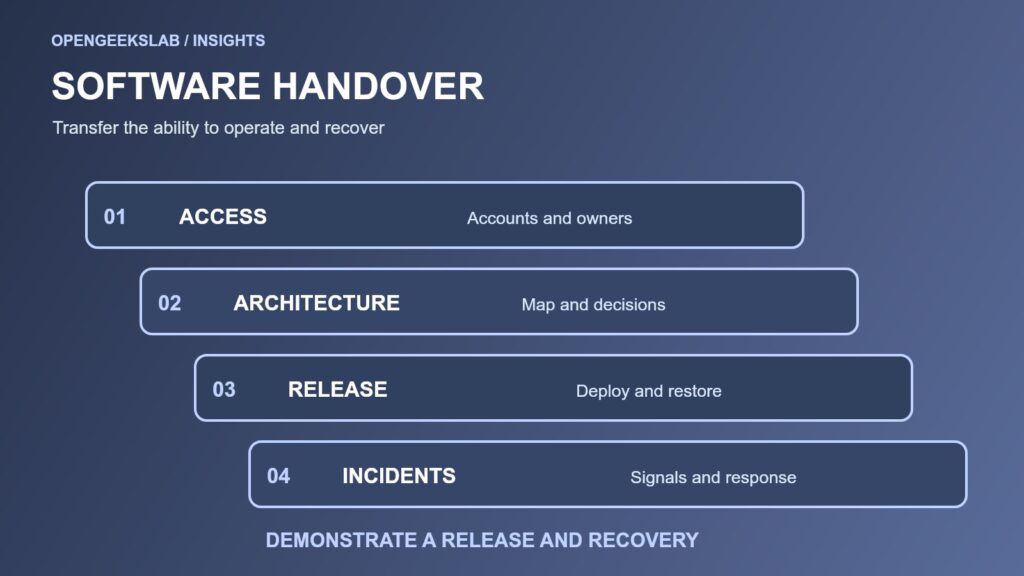
A business owner's checklist for taking operational ownership of custom software.
 November 9, 2026
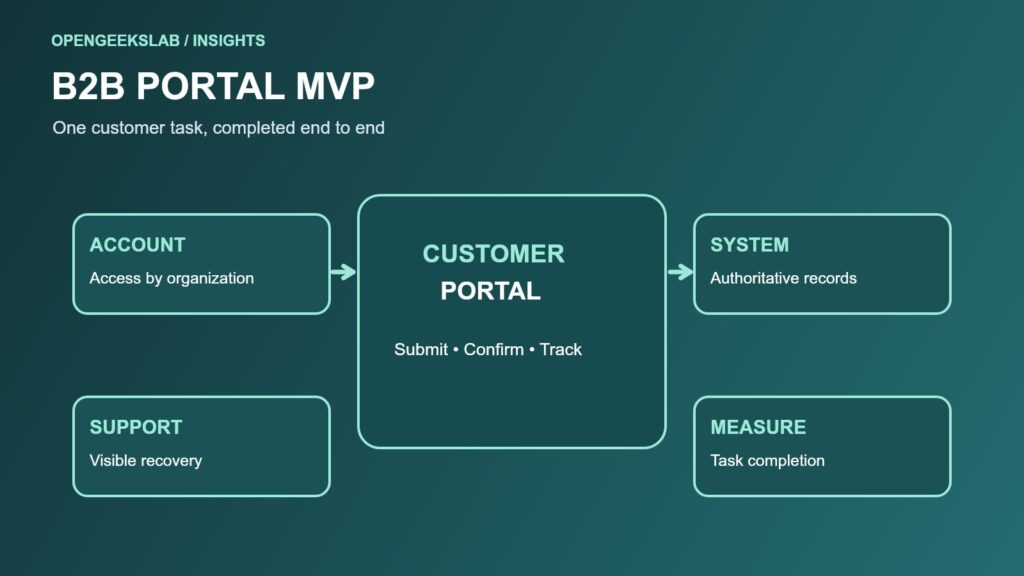
How to scope a first B2B portal release around the customer task and operational boundaries.
 November 9, 2026
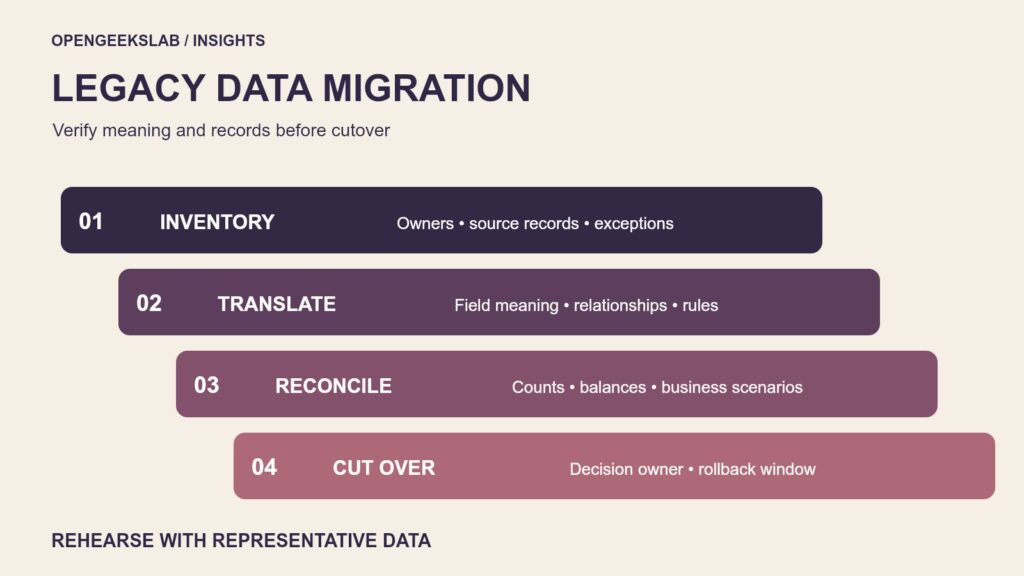
A business-focused plan for mapping, rehearsing and verifying a legacy data migration.
Every project is scoped individually. We estimate by capability and uncertainty, not by counting screens, and stage the budget so each step ends with something you can evaluate. See Engagement & pricing for what influences cost.
It depends on scope, integrations and the evidence you need before release. On past projects, a four-person team delivered a beta telemedicine MVP in two weeks, and a five-person team delivered a marketplace web product in six months and its mobile app in four.
Our case studies include React, Next.js, Angular, React Native, Swift, Kotlin, Node.js, NestJS, Java, PHP, MongoDB, MySQL, Redis, Elasticsearch and AWS. We choose the stack that fits the product, risk and operating reality.
Yes. We build AI assistants, retrieval and agent workflows, and add AI to existing products, alongside web, mobile, SaaS and modernization work.
No. A focused discovery is useful when requirements, feasibility or risks need clarification. A well-defined project or established product workstream can move directly into delivery planning.
Yes. The engagement can start with a codebase and architecture review, a defined product workstream, modernization, integration or additional engineering capacity alongside your team.
Often, yes, but the useful starting point is the workflow and available data. We assess feasibility, integration, privacy, evaluation, cost and fallback before recommending an AI implementation.
The engagement is structured so the client can own and operate the delivered product, source code and project knowledge under the agreed contract.
Start with the business need
Tell us about your product, existing software or operational challenge. We'll help identify a practical next step.