Direct answer: The most persistent business challenges in 2026 are not isolated technology gaps. They are the difficulty of adapting skills, using AI responsibly, connecting fragmented systems, protecting operations, meeting changing customer expectations and delivering improvements fast enough to matter.
1. Skills change faster than operating models
The World Economic Forum’s Future of Jobs Report 2025 identifies skills gaps as a major barrier to business transformation and highlights increasing demand for AI, data, cybersecurity and technological literacy alongside analytical thinking and resilience.
A company cannot solve this only by buying software. Map the capabilities required for priority workflows, identify where people need training, and design systems that support clear decisions rather than hide them behind automation.
2. AI pilots struggle to become reliable operations
Many teams can demonstrate a model but cannot explain quality, permissions, failure handling, cost or ownership in production. Select a workflow with a measurable outcome, define a human decision boundary and build evaluation before expanding access.
OpenGeeksLab’s AI business process automation guide provides a structured approach to choosing work worth automating.
3. Fragmented systems create manual work
Customer, finance and operational data often live in systems that were purchased at different times. Employees compensate with spreadsheets, copying and informal approvals. The result is slow work and unclear ownership.
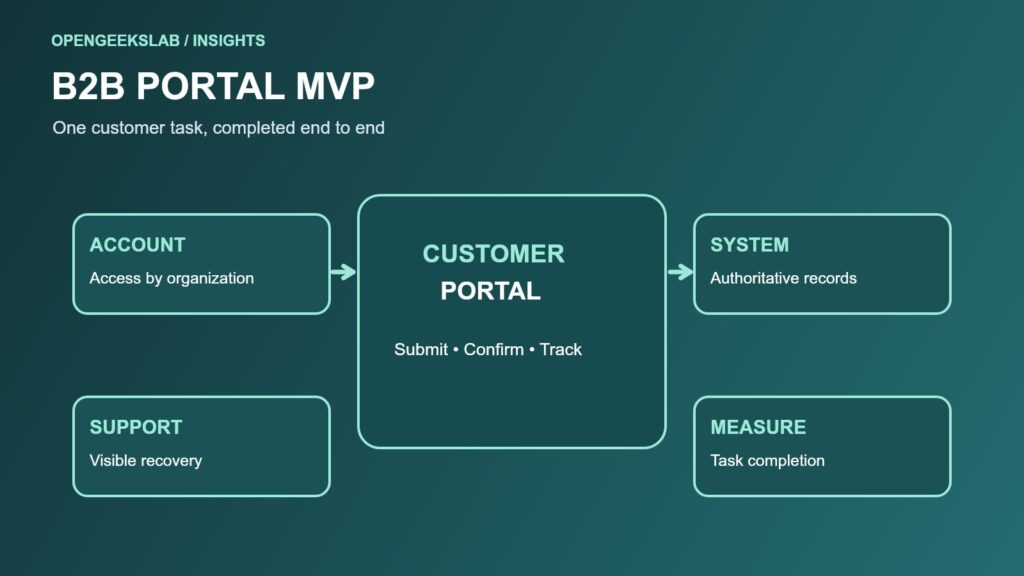
Begin with one business event, define the authoritative record and connect only the systems needed to complete that workflow. An integration should have monitoring, retries, reconciliation and an owner. The API integration design guide explains these controls.
4. Security must support delivery, not arrive afterward
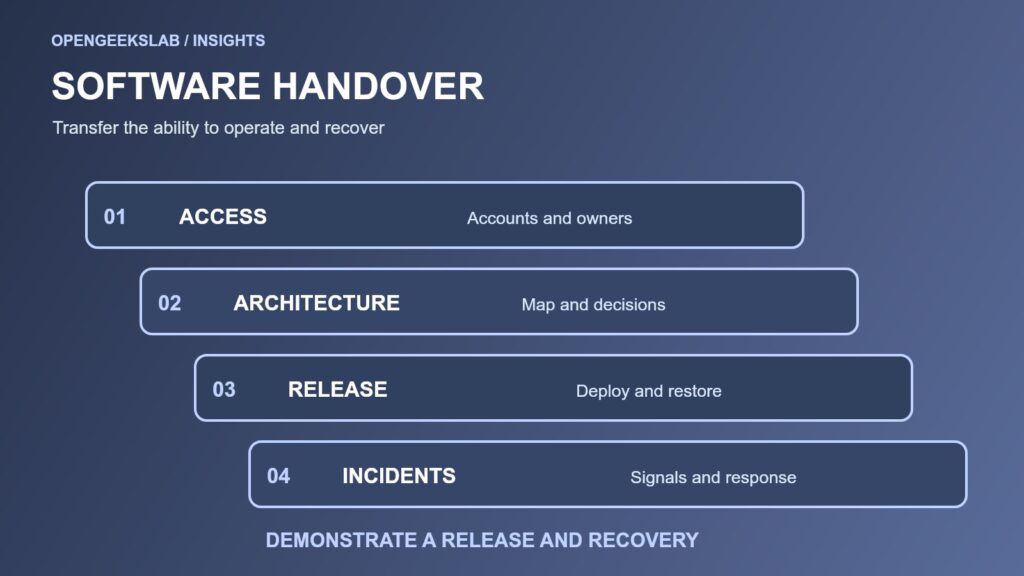
Identity, data classification, audit, backup and incident response should be product requirements. Add threat review and recovery tests to delivery rather than creating a separate checklist just before launch.
Quality decisions also require tradeoffs. Microsoft’s Well-Architected Framework organizes them around reliability, security, cost optimization, operational excellence and performance efficiency.
5. Customers expect connected experiences
Customers compare every digital interaction with the clearest products they use elsewhere. They expect consistent account data, mobile usability, accessible interfaces and timely status. A polished frontend cannot compensate for broken fulfilment or support workflows.
Map the complete journey from discovery through service and renewal. Measure task completion, time, errors and support demand. Prioritize the handoff with the highest customer and operating impact.
6. Delivery capacity is consumed by legacy constraints
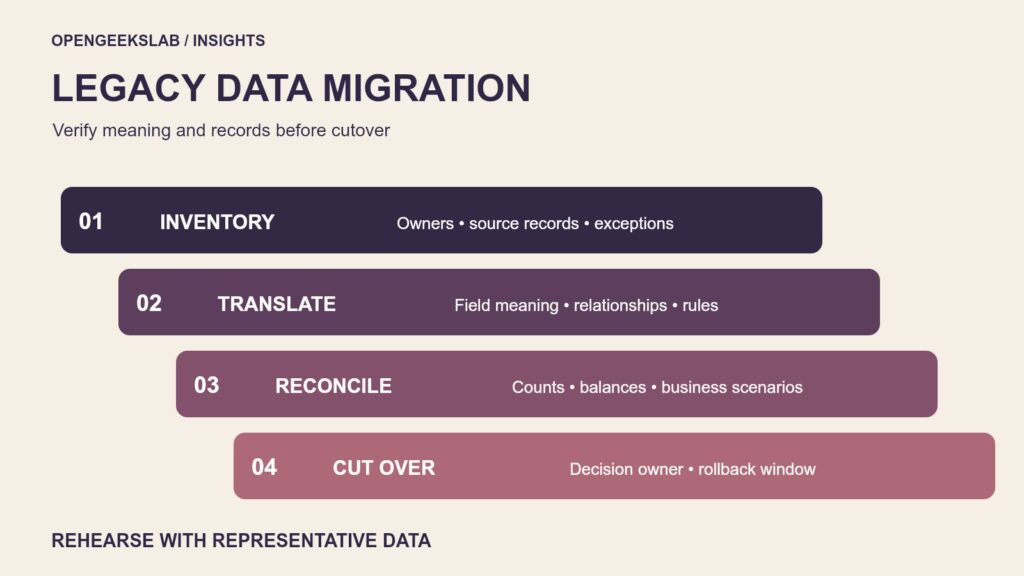
Old systems can remain valuable while making change slow. Replace the constraint, not automatically the whole platform. Stabilize testing and deployment, define a boundary, then move one capability while the current system continues to operate.
The incremental modernization guide explains how to choose a bounded first slice and keep rollback possible.
Turn a challenge into a delivery decision
- Name the business event that reveals the problem.
- Record a baseline: time, error rate, conversion, cost or support demand.
- Identify the people, systems and data involved.
- Choose the smallest change that can improve the baseline.
- Define security, reliability and operational acceptance criteria.
- Deliver to a limited group, compare results and decide whether to expand.
OpenGeeksLab’s product discovery service turns a broad challenge into a testable scope, while software modernization and custom delivery address constraints in existing systems.
Frequently asked questions
Which business challenge should we address first?
Start with a constraint that affects an important customer or operating outcome, has a clear owner and can be measured before and after change.
Should transformation begin with technology selection?
No. Define the workflow, outcome, data ownership and constraints first. Technology selection should follow those decisions.