Direct answer: Custom software discovery turns a business problem into a decision about what to build, buy or stop. For Swedish B2B teams, a useful discovery phase ends with evidence about users, workflows, technical constraints and the next investment decision.
OpenGeeksLab can help through custom software development. Read our related practical guide for a connected view of the delivery process.
Frame the decision
Name the business outcome, the people affected and the cost of the current process. Describe what would make the project worth continuing. Keep solution ideas as hypotheses until the team has observed the workflow and tested the constraints.
Study the real workflow
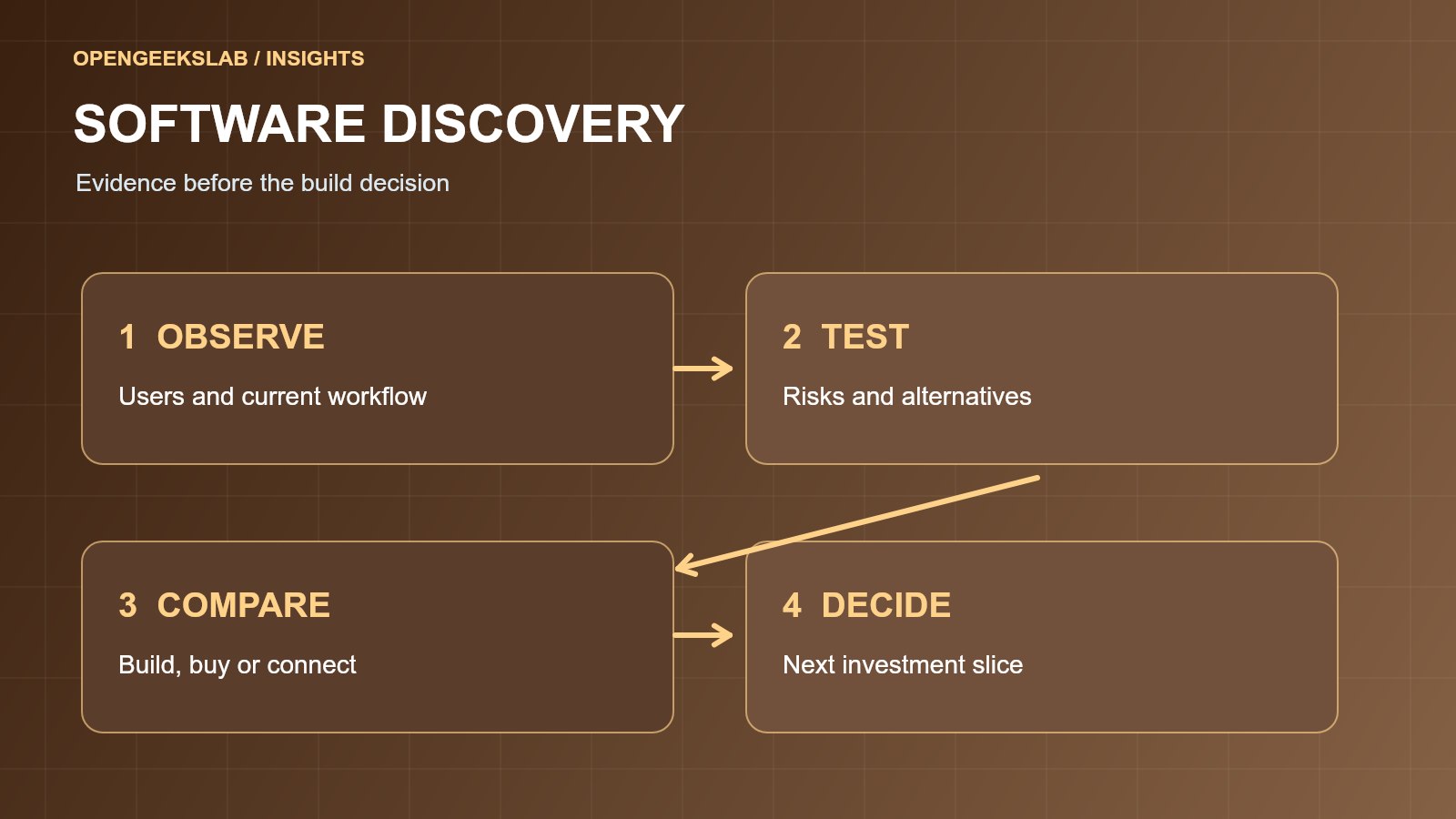
Interview the people who perform, supervise and support the process. Walk through routine cases and exceptions. Record the systems involved, permissions, handoffs and data quality problems. The UK Government Service Manual discovery guidance emphasizes understanding the problem, users and constraints before building a service.
Test the riskiest assumptions
Select a small set of questions that could change the investment decision: user adoption, integration access, data quality, security or technical feasibility. A prototype can test a workflow without becoming production code. The Service Manual alpha guidance describes testing ideas before committing to a full build.
Produce decision-ready outputs
Deliver a workflow map, prioritized user needs, key constraints, architecture options, initial delivery slices and a risk register. Show what was observed, what remains uncertain and the evidence needed next. A feature list alone does not explain cost or value.
Choose the next slice
Compare a configured product, a custom layer and a new application against the same criteria. Define the smallest release that can be used by a real team and measured. Include accessibility, security, ownership and support from the beginning. For cross-border teams, clarify language, time-zone and data-handling expectations in the project brief.
Example: a fragmented approval process
Imagine a Swedish B2B company whose sales, finance and operations teams approve the same customer request in different tools. Discovery should document where requests arrive, who approves exceptions, which record is authoritative and what information is re-entered. The result may support a configured product, a focused integration or a custom workflow. The team should not commit to a new platform before those constraints and alternatives are visible.
Turn findings into a decision framework
Rate each option on user fit, integration access, security and data ownership, operating cost, delivery effort and ability to change. Identify the assumptions that could reverse the ranking. For a custom build, define the smallest workflow slice that users could actually complete. For a packaged option, test the exception cases that a sales demonstration may omit. Record the decision owner and a date for revisiting the recommendation.
Set a useful handoff
A discovery handoff should make the next team able to act: user journeys, current-state map, measurable outcome, tested assumptions, technical risks, prioritized scope and open decisions. Separate observations from hypotheses. If the evidence points away from building, say so and describe the cheaper next step. The value of discovery is a better investment decision, not a longer requirements document.
Frequently asked questions
Is discovery the same as writing a specification?
No. Discovery tests the problem and major assumptions so the team can decide what specification and delivery plan are justified.
When should engineering join?
Bring engineering into discovery early enough to test integration, data and security assumptions before scope hardens.
Next step
If your team is deciding whether to replace spreadsheets, connect existing tools or build a new workflow, start with custom software discovery. Bring one painful process and the decision it is blocking.